-
Total Active Hub
Your gym discount isn't a wellbeing strategy
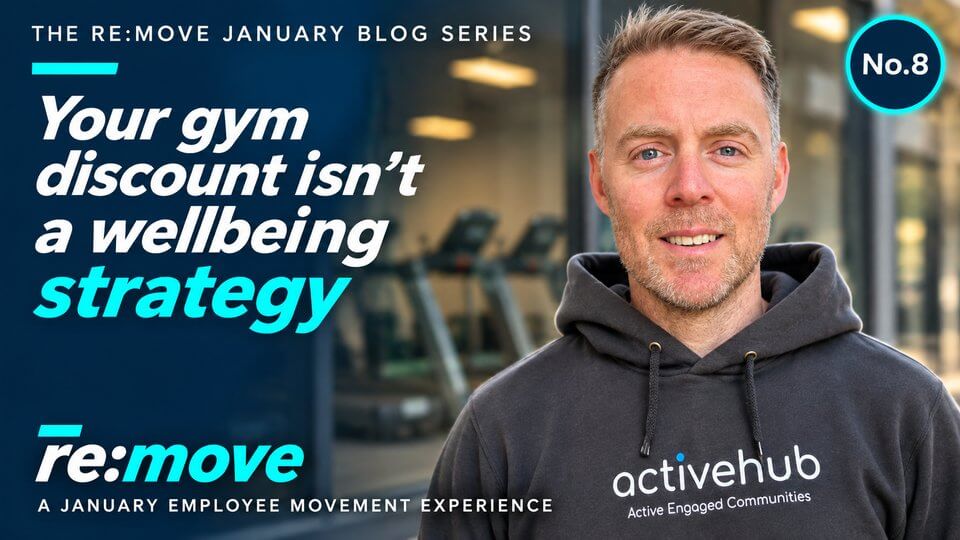
Every January. Somewhere, an HR team is about to press send on the email: "New year, new you! Don't forget your discounted gym membership."
I want to make a case that will annoy some people. That email is not a wellbeing strategy. It's a perk that looks like one. And January is exactly when we should be honest about the difference.
The January ritual we all know
Every year it plays out the same way. ukactive, citing 4GLOBAL data, reports that January is 28% busier than December in UK gyms. Car parks fill up, new trainers squeak, and the queue for the squat rack becomes a social event.
Then it stops. Strava has found that the second Tuesday of January is consistently the day its users are most likely to fall away from their new routine. It calls it Quitter's Day.
By the end of the month it shows in people's bank accounts. In a January 2026 survey of 1,000 UK gym members, Atom bank found that 43% were paying for a fitness subscription they hadn't used in at least two weeks.
That isn't a failure of willpower. It's a pattern so predictable you could set your calendar by it.
Paying not to go
This isn't new, either. Economists Stefano DellaVigna and Ulrike Malmendier studied nearly 8,000 health club members and their actual attendance. Their paper has the best title in behavioural economics: Paying Not to Go to the Gym.
Members on monthly contracts of over $70 went about four times a month. That worked out at more than $17 a visit, when a pay-as-you-go pass would have cost around $10. On average, they gave up about $600 in savings over their membership.
The researchers' explanation is simple: we overestimate our future selves. We sign up for the person we plan to be in March, not the person we are on a dark Tuesday in January.
Now think about your benefits portal. A gym discount doesn't fix that overconfidence. It just makes a bad bet slightly cheaper.
Who your gym discount actually reaches
Here's the number that should worry every benefits leader. The latest State of the UK Fitness Industry report counts 12.1 million gym members, a penetration rate of 17.6%. That's a record high for the industry, and it still means more than four in five people in the UK don't have a gym membership.
So who uses your gym discount? Mostly the people who were going anyway. You've subsidised the already active, and called it inclusion.
The people who most need support are the least likely to walk through a gym door. Sport England found that only 43.7% of adults with two or more characteristics of inequality meet the activity guidelines, compared with 74.3% of those with none. And around a quarter of adults in England are still inactive, doing less than 30 minutes of activity a week.
Think about who's in that group in your organisation. The night-shift nurse. The train driver on early turns. The warehouse team. The carer who leaves at 4pm sharp. The colleague with a disability, or a long-term condition, or who simply feels that a gym "isn't for people like me". A discount code changes none of that.
A perk is not a culture
This is the uncomfortable part for HR and benefits leaders, and I say it as someone who works alongside you every day.
A gym discount is easy to buy. It looks good on a benefits statement. It ticks the "physical wellbeing" box. And then nobody measures whether anyone actually moved.
So here's a test. Answer these three questions honestly:
- How many of your people used the gym benefit last month? Not signed up. Used.
- How many of your frontline and shift workers can realistically use it?
- What happened to usage in February?
If you can't answer them, you don't have a physical health strategy. You have a line in a benefits brochure.
Movement becomes part of a workplace when it's visible, social and part of the working day: when managers hold walking one-to-ones, when teams cheer each other on, when leaders are seen taking part, and when a 20-minute walk counts as much as a spin class. A discount sits in a portal. A culture sits in the room.
To be clear: gyms aren't the enemy
Gyms work brilliantly for people who already go. If your people love the gym, brilliant: keep the discount, and partner with gyms where it makes sense.
The problem isn't gyms. The problem is building your workplace movement strategy around a model that most of your workforce will never use, and that many who do will drop within weeks.
What actually works
If the goal is a healthier, more connected workforce, design for your least active employee, not your keenest.
- Meet people where they are. Any activity counts: a lunchtime walk, chair yoga, gardening, cycling to work, the gym. Twenty minutes is achievable on a bad day.
- Make it social. People keep people active. When Home Depot staff set personal and team goals, the proportion regularly doing moderate or vigorous activity rose from about 30% to about 50%. A study of an NHS hospital step challenge found that support from work colleagues was the main source of encouragement.
- Make it small and daily. UCL research found it takes an average of 66 days to form a new habit, and that missing a day doesn't undo the progress. Small and repeatable beats big and heroic.
- Measure behaviour, not sign-ups. Track how many people are still moving in week three, not how many clicked a link in January.
Why now is exactly the moment
The January rush is fading as you read this. That's not a problem. It's an opportunity.
The smartest thing an employer can do in January is let the resolution rush happen, then step in when it fades, with something small, social and open to everyone. That's why we built re:move to start on 20 January, after the rush, not during it: 20 minutes, 20 days, teams of four, and any activity counts.
So this January, by all means keep the gym discount. Just don't call it your wellbeing strategy.
Register your organisation for re:move, free for organisations new to Active Hub. Registration closes 13 January.
-

20 ways to move for 20 minutes (no gym needed)
blog
by
Total Active Hub
-

Blue Monday 2027: workplace ideas that last longer than a day
blog
by
Total Active Hub -
Wellbeing calendar 2027: key UK dates for HR and People teams
blog
by
Total Active Hub -

100 team names for your workplace challenge: funny, British and inclusive
blog
by
Total Active Hub
-
-
Success Stories
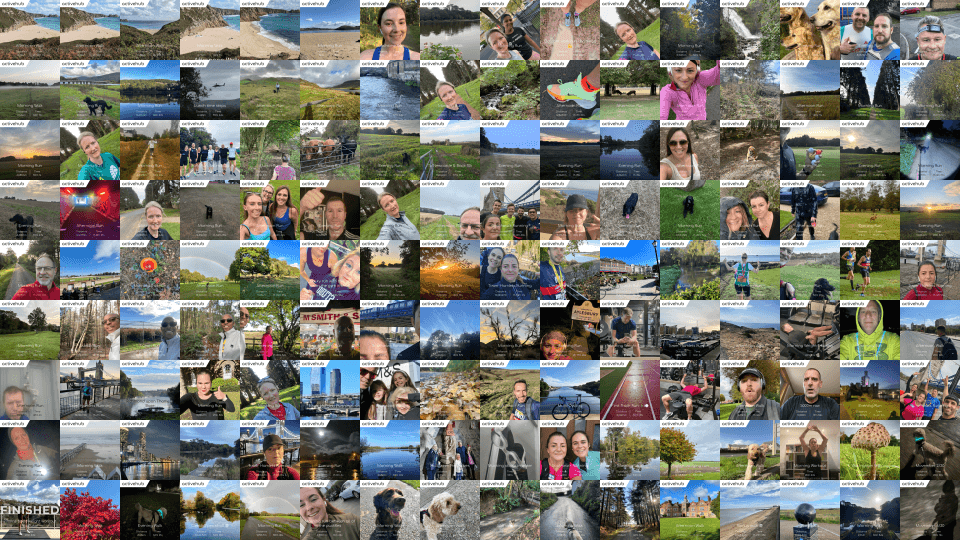
Every day, hundreds of activities are recorded across Total Active Hub, by users wanting to make a real difference to their physical health.
Our users are empowered by their employers to move at least 150 minutes per week whilst being rewarded with numerous incentives such as charity donations, trees and school meals.
Why not take a few moments to read and be inspired by our real-life success stories?
