-
Total Active Hub
50 Ways to Complete Your 20 Minutes of Movement Every Day

Twenty minutes of movement a day is enough to meet the national guidelines, but it rarely needs to happen in one go.
The people who manage it consistently are not the ones with the most willpower; they are the ones who have found their pockets of opportunity — the ten-minute windows that already exist in an ordinary day and simply need using.
So here are 50 ways to reach your 20 minutes, sorted by where you are.
None of them requires kit, a gym or a spare hour. Pick a handful that fit your day, stack two or three ten-minute windows together, and the target takes care of itself.
At your desk or on calls
- Take phone calls standing up and pacing
- Do a lap of the floor every time you finish a task
- Stand and stretch for two minutes at the top of each hour
- Do calf raises while the kettle boils
- Walk on the spot during a webinar you do not need to be on camera for
- Set an alarm to move for two minutes every 30
- Do seated leg lifts or ankle circles under the desk
- Roll your shoulders and do neck stretches between meetings
- Stand for the first ten minutes of every meeting
- Take the long way to the printer, kitchen or bathroom
Around the workplace
- Turn one sit-down meeting into a walking meeting
- Always take the stairs instead of the lift
- Walk over to a colleague instead of messaging them
- Park at the far end of the car park
- Get off the bus or train one stop early
- Do a full lap of the building on your lunch break
- Deliver something by hand rather than emailing it
- Take a walking one-to-one instead of a desk-based one
- Use the toilets on a different floor
- Carry items in two trips rather than one, on purpose
On the commute or out and about
- Walk or cycle part of your journey to work
- Walk to the next bus stop before getting on
- Take a ten-minute stroll before you start the day
- Do a loop of the block before heading indoors
- Walk to a slightly further shop or cafe
- Stand for your train journey instead of sitting
- Take a scenic, longer route home once a day
- Walk while you are on the phone to a friend
- Do your errands on foot rather than by car
- Add a short detour through a park on the way past
At home
- Put on three songs and move around the kitchen
- Do a ten-minute mobility or stretch routine before bed
- March on the spot through the adverts or between episodes
- Do a lap of the garden with your morning coffee
- Take the dog on a slightly longer walk
- Do squats or lunges while dinner is in the oven
- Hang the washing and tidy up at a brisk pace
- Walk up and down the stairs a few extra times
- Do a short online movement video in the living room
- Potter in the garden for ten focused minutes
With other people
- Suggest a walk instead of a coffee catch-up
- Start a lunchtime walking group with a colleague
- Take the kids to the park and join in rather than sit
- Do a family walk after your evening meal
- Set a shared step goal with a friend and check in
- Play an active game with children or grandchildren
- Meet a friend for a walk-and-talk at the weekend
- Volunteer for the dog walk or the school run on foot
- Join a colleague for the stairs instead of the lift
- Turn catching up with a neighbour into a stroll
Why this works better than a workout plan
The reason this approach sticks is that it works with your day rather than against it. The UK Chief Medical Officers recommend 150 minutes of activity a week, which is a little over 20 minutes a day, and there is nothing that says it has to be continuous.
Research on habit formation from Lally and colleagues at University College London (2010) found repetition in a consistent context — not intensity — is what turns a behaviour automatic, over an average of 66 days.
Small windows, used often, are exactly how a lasting habit is built.
It also reaches people a gym never will. With the World Health Organization estimating around one in four adults worldwide is insufficiently active, the answer for most is not a harder plan but an easier entry point.
Twenty minutes, broken into pieces you barely notice, is that entry point.
If you would like help building this kind of everyday movement into your workplace so it reaches everyone, not just the already-active, we are always happy to talk it through.
Sources
UK Chief Medical Officers’ Physical Activity Guidelines (2019) — 150 minutes of moderate activity a week, equivalent to a little over 20 minutes a day, and can be accumulated in shorter bouts.
Lally et al., University College London (2010), European Journal of Social Psychology — average 66 days to form a habit (range 18-254 days).
World Health Organization, Global Action Plan on Physical Activity 2018-2030 — around one in four adults insufficiently active.
Sport England, Active Lives Adult Survey November 2024-25 (published April 2026) — 64.6% of adults active at 150+ minutes a week, the highest on record.
-
100 Funny Team Names for Your Fitness Challenge
blog
by
Total Active Hub
-
Day-One SSP: The Cost of Inactivity Just Went Up
blog
by
Total Active Hub -
When Movement Becomes Money: Live Case Study
blog
by
Total Active Hub -
National Walking Month: The Most Underrated Habit for Better Health
blog
by
Total Active Hub
-
-
Success Stories
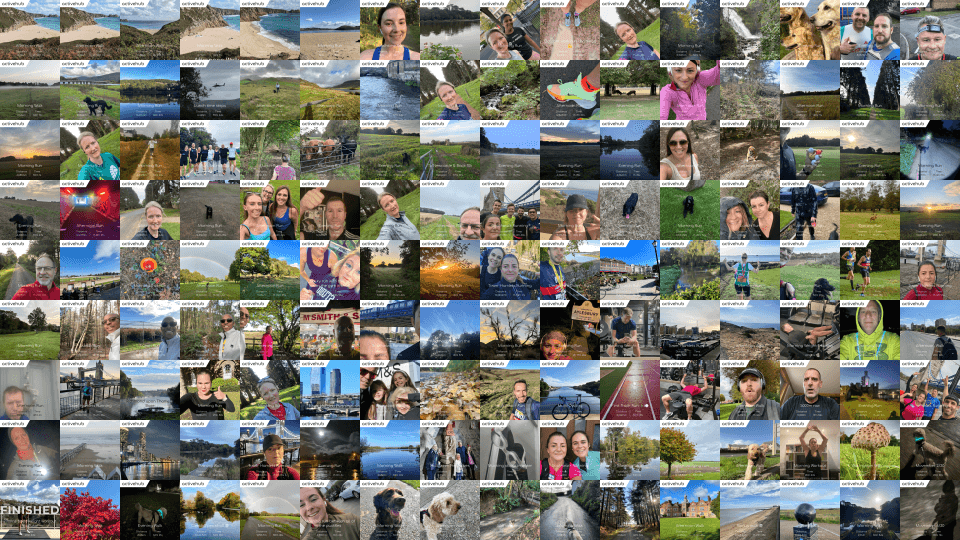
Every day, hundreds of activities are recorded across Total Active Hub, by users wanting to make a real difference to their physical health.
Our users are empowered by their employers to move at least 150 minutes per week whilst being rewarded with numerous incentives such as charity donations, trees and school meals.
Why not take a few moments to read and be inspired by our real-life success stories?
