-
Total Active Hub
Habits, not resolutions: why January fitness drives fail, and what works instead
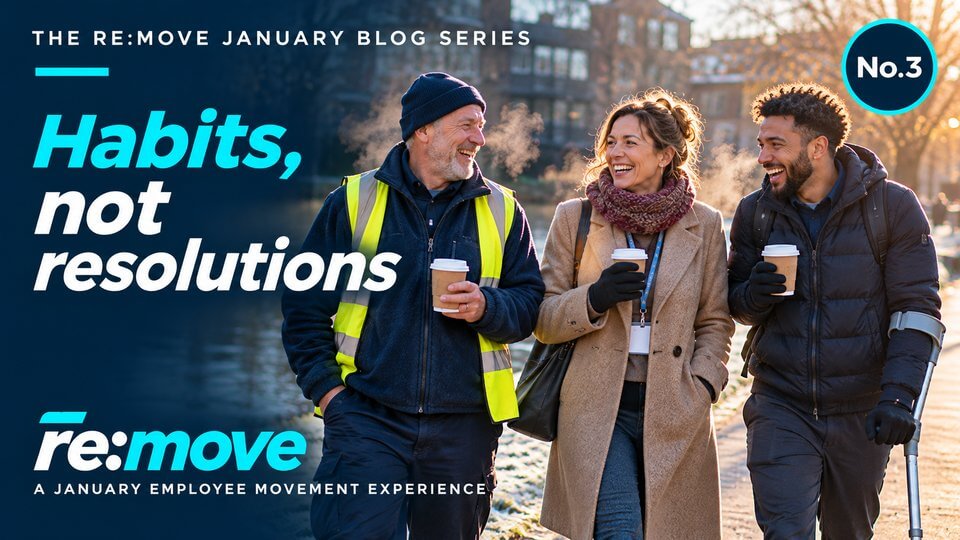
Every January, the same thing happens, and every January we act surprised.
Gyms fill up. Data from 4GLOBAL's DataHub, covering two years of data from 1,300 UK health and fitness clubs, showed that January is 28 per cent busier than December, and 10 per cent busier than the previous October, November and December combined (ukactive). Then, a couple of weeks in, it starts to fade. Strava has a name for the moment: Quitter's Day. It falls on the second Tuesday of January, and for more than five years it has been the most common day for Strava users to take a break from activity (TechRadar).
Big promise. Brief burst. Quiet exit. Most workplace wellbeing plans for January are built on top of that pattern, and then we wonder why February looks like November.
I think we've got January the wrong way round. January rewards big promises and punishes ordinary people. Habits come from small, repeated actions. So employers shouldn't try to win the first week of January. They should show up for the third.
Why resolutions fail
Resolutions aren't badly meant. They're badly built.
They're all or nothing. "Gym five times a week." "Run every day in January." A resolution is a pass or fail test, and it's very easy to fail within days. One missed week doesn't feel like a wobble. It feels like proof you were never going to manage it.
They're built for people who are already motivated. The colleague who already runs three times a week can bolt on a fourth. The colleague who hasn't exercised in years is being asked to become a different person overnight, in the darkest, busiest, most skint month of the year.
They run on willpower. Willpower is brilliant for about a fortnight. Then real life arrives: a late shift, a sick child, a cold, a deadline. Anything that depends on feeling motivated every single day is going to break, because nobody feels motivated every single day.
None of this is a character flaw. It's a design flaw. And design is something employers can change.
The problem with the gym model
I want to be clear about this, because it's easily misheard. Gyms are brilliant for the people who use them. If a gym membership gets one of your people moving, that's a win.
The problem isn't gyms. It's building workplace wellbeing around them.
When the January plan is a gym discount and a "new year, new you" email, think about who it leaves out. The shift worker whose rota doesn't fit a gym routine. The colleague who hasn't been active for years and won't walk into a room full of mirrors and Lycra. The person whose body, budget or caring responsibilities make a gym unrealistic. The person who simply feels a gym isn't for them.
Those are often the people who would benefit most from moving a bit more. And they're exactly the people a gym-led January misses. A model that mostly serves the already active can look like a success in the January numbers while changing very little for everyone else.
What the research actually says about habits
Here's the part I find most useful, and most freeing.
Researchers at University College London followed people trying to build a new daily habit, such as eating a piece of fruit with lunch or going for a run before dinner. They found it took an average of 66 days for the new behaviour to become automatic (UCL).
That number gets quoted a lot, so two details matter.
First, 66 days is an average, not a rule. In the original study, the time people took to reach near-automaticity ranged from 18 days to 254 days (Lally et al., 2009). Some people get there in under three weeks. Some take most of a year. There's no magic number, and anyone selling you one is guessing.
Second, slips don't break the process. The UCL researchers found that missing one opportunity did not significantly affect habit formation (UCL). What did get in the way was being very inconsistent. Missing a day is fine. Giving up is the problem.
Put those together and you get a very different January. Not big promises and perfect streaks. Small actions, repeated often, with forgiveness built in. That's the opposite of a resolution, and it's how habits actually form.
I learned this the long way round. For me it was rowing, and the plain consistency of getting up each morning to do it, that changed things. Not one heroic session. The repetition. It's ultimately why Total Active Hub exists.
Why employers should go second
If habits take weeks or months, and motivation peaks in the first fortnight of January, then the worst time to launch your big wellbeing push is the first working day of the year.
In that first week, your keenest people are already moving and don't need you. Everyone else is catching up on their inbox, and your message is one of hundreds.
The moment that matters is when the rush fades. By the third week of January, the novelty has worn off, the resolutions have mostly gone, and plenty of people are quietly disappointed in themselves. That is when an employer can do something genuinely useful: offer a fresh start that's small, social and open to everyone.
So let the rush happen. Then step in, from 20 January, with something people can actually keep doing.
What that looks like
This is the thinking behind re:move, our free January workplace challenge.
It's deliberately small: 20 minutes a day, for 20 days, from 20 January. Any activity counts, from walking and wheeling to swimming, yoga or a kickabout in the park. People take part in teams of four, so everyone's minutes add to a shared goal and someone notices when a teammate goes quiet. Nobody is last on their own, and a missed day doesn't sink anyone.
I want to be honest about what 20 days can and can't do. Twenty days starts a habit. It doesn't finish it. On the research, most people need longer than that, and some need much longer. Anyone who tells you a three-week challenge will permanently change your workforce is overselling.
So what happens after the challenge matters as much as the challenge itself. When re:move ends on 8 February, the Active Hub keeps going, so people who've found their rhythm have somewhere to carry on, with the same teams and the same ethos of any movement, every body. The challenge is the start. The habit is built in the weeks after.
That's the shift I'd ask every HR, People and Wellbeing leader to make this January. Stop trying to win the first week. Stop measuring success by how many people signed up to something in a burst of New Year energy. Start asking how many people are still moving in March, and design for that.
Habits, not resolutions
January will be busy again. The gyms will fill, the resolutions will be made, and Quitter's Day will arrive on schedule. None of that is your problem to fix.
Your opportunity comes afterwards: catching the people the resolution rush leaves behind, and giving them something small enough to keep doing. Small actions, repeated, with room to slip. That's how habits stick, at work and everywhere else.
Register your organisation for re:move, free for organisations new to Active Hub. Registration closes 13 January.
-
How to run a workplace activity challenge that everyone joins
blog
by
Total Active Hub
-

7 January wellbeing ideas for employees that last beyond the resolution rush
blog
by
Total Active Hub -

A Whole City Moving for 30 Days. So Why Won’t Our Workplaces?
blog
by
Total Active Hub -
World Mental Health Day: What Movement Did for My Mind
blog
by
Total Active Hub
-
-
Success Stories
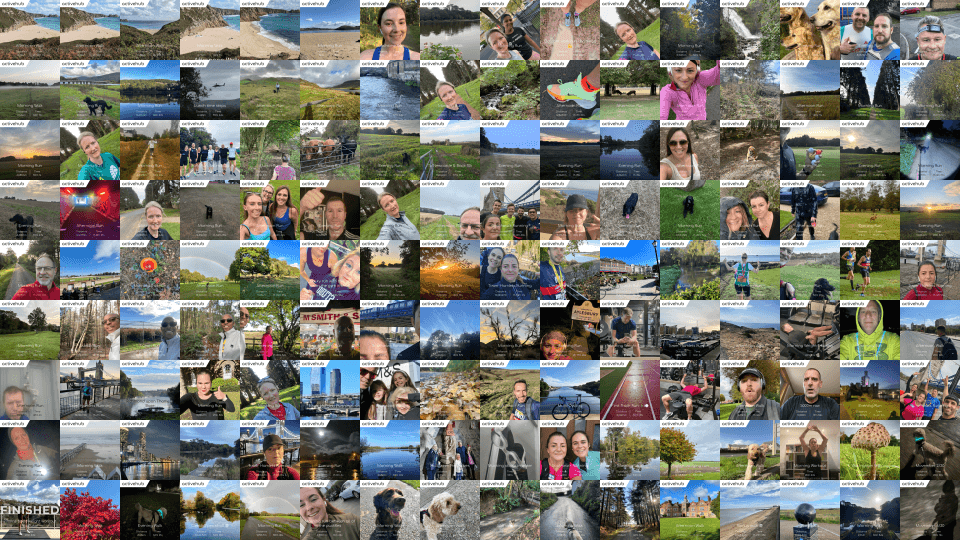
Every day, hundreds of activities are recorded across Total Active Hub, by users wanting to make a real difference to their physical health.
Our users are empowered by their employers to move at least 150 minutes per week whilst being rewarded with numerous incentives such as charity donations, trees and school meals.
Why not take a few moments to read and be inspired by our real-life success stories?
