-
Total Active Hub
How to run a workplace activity challenge that everyone joins
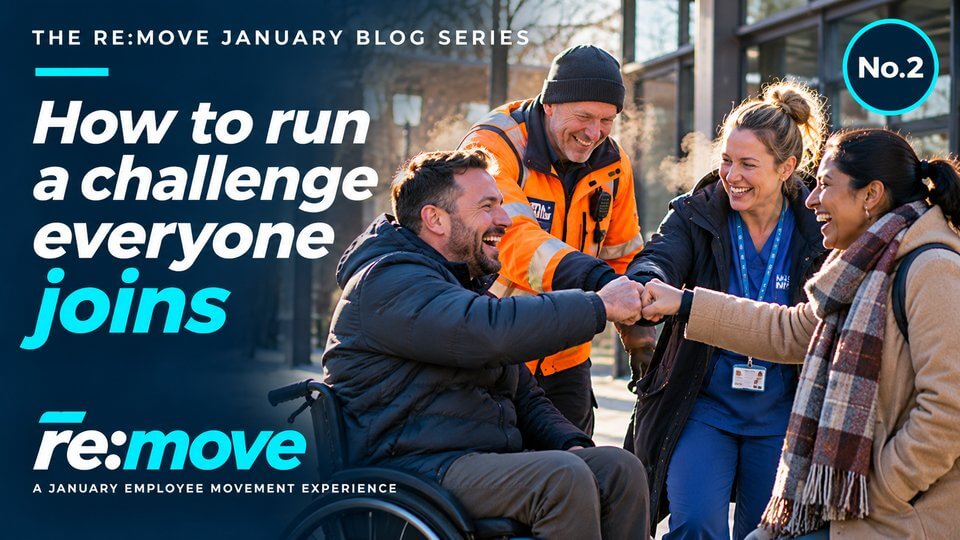
If you have run a step challenge at work, you will probably recognise the pattern. Launch week is busy. By week two, the same handful of names sit at the top of the leaderboard: the runners, the cyclists, and the colleague whose job keeps them on their feet all day. Everyone else checks in once or twice, sees how far behind they are, and quietly stops.
That is not a motivation problem. It is a design problem. Most workplace fitness challenges are designed by people who already enjoy being active, for people who already enjoy being active. An individual leaderboard mostly rewards whoever was moving before the challenge began.
The people who drift away are not random, either. Sport England's latest Active Lives survey found that only 44 per cent of adults with two or more characteristics of inequality meet the Chief Medical Officers' guideline of 150 minutes of activity a week, compared with 75 per cent of adults with none. Those characteristics include disability, age, social group, ethnicity and having a young child. A challenge that rewards existing activity widens that gap rather than closing it.
So turn the brief around. Design your challenge for your least active employee. If it works for them, it will work for everyone else. Here are the five principles we use, and a ten-question checklist to test any challenge before you launch it.
Principle 1: count any activity, not just steps
Steps are easy to count, which is why so many challenges use them. But a step count only sees one kind of movement. It misses the wheelchair user, the swimmer, the cyclist, the colleague whose exercise is yoga or strength work, and anyone recovering from an injury.
Steps also let job role decide the leaderboard. A colleague walking station platforms all shift will out-step a contact centre adviser before either of them has chosen to move. That is not a fair contest, and everyone taking part knows it.
Minutes are fair to everyone. Ten minutes of swimming, wheelchair pushing, gardening, dancing in the kitchen or walking the dog all count the same. Everybody starts level, and the challenge measures the effort people choose to make, not the job they happen to do.
Principle 2: build teams, not individual leaderboards
The strongest evidence for team design comes from programmes that combined personal goals with team goals.
In Home Depot's "Move to Improve" programme, a 12-week study of 1,442 employees published in the American Journal of Preventive Medicine, staff set weekly personal and team goals. The proportion of employees who regularly did moderate or vigorous activity rose from about 30 per cent at the start to about 50 per cent during the last six weeks. The lead researcher, Rod Dishman, put the sustained progress down to the social incentives and support that came from personal goals feeding into team success.
The UK evidence points the same way. A University of Nottingham study of a six-week pedometer challenge in an NHS hospital trust found that social support to take part came mostly from work colleagues. Of the 296 staff surveyed, 68 per cent said being part of a team motivated them to be more active, and 95 per cent of respondents completed all six weeks. The researchers recommended interventions with a group-based component.
Teams matter most for your least active people. On an individual leaderboard, a 15-minute walk puts you near the bottom. In a team, the same walk adds to a shared total and someone notices. Nobody is last on their own. Keep teams small enough that every member's contribution is visible, and mix fitness levels so no team is stacked with the keen few. If you need a quick way to get teams going, our team names post has plenty of ideas.
Principle 3: set a small daily target
Twenty minutes a day is achievable on a bad day: after a night shift, during a busy week, or with a cold. A big weekly total is not. Once someone falls behind a weekly target by Wednesday, they tend to give up on the week, and often on the challenge.
A daily target resets every morning, so a missed day does not sink the whole week. It also shifts the focus from how much people do to how often they do it, which is what builds a habit. Twenty minutes a day across a week comes to 140 minutes, within touching distance of the 150-minute guideline, without asking anyone to transform their routine.
Celebrate the days people hit their target, not the size of their total. Consistency is the result you want, so make it the thing you recognise.
Principle 4: design for frontline and shift staff first
If a challenge works for a train driver on an early turn, a nurse on nights or a warehouse operative without a desk, it will work for your office staff too. The reverse is rarely true.
- Use a mobile app, not a desktop portal. Many frontline colleagues have no work laptop and limited access to email or the intranet. If joining needs either, you have lost them at registration.
- Avoid anything that only works in office hours. Lunchtime classes and Wednesday afternoon walks exclude anyone on a rota. Make sure every activity can be done at any time of day or night.
- Choose activities that fit a break or a commute. A walk from the station, a stretch before a shift or a ten-minute walk on a break all count, and none of them needs kit or a changing room.
- Mix departments within teams. Put head office and depot colleagues in the same team, so frontline staff are not a separate league. It breaks down silos as well.
- Reach people where they are. Use shift briefings, rota noticeboards and line managers, not just an all-staff email.
For more ways to make January movement work for every shift pattern, see our 7 January wellbeing ideas for employees.
Principle 5: measure engagement, not just activity
Total minutes or steps tell you how much your most active people did. They tell you very little about whether the challenge reached everyone else. Track these instead:
- Participation rate: the share of eligible employees who logged activity at least once.
- Week-three retention: how many people are still active in week three, when the novelty has worn off.
- Team retention: how many teams still have most of their members logging by the end.
- Reach by site, department and shift pattern: where the gaps are.
Share this data with HR live, not in a report a month after the challenge ends. Live data lets you act while it still matters: nudge a quiet site, ask a manager to rally their team, or spotlight a team that has kept everyone involved.
A quick checklist before you launch
Answer yes or no to each question. Any "no" is worth fixing before launch.
- Does every form of activity count, not just steps?
- Can a wheelchair user take part on equal terms?
- Is the challenge team-based, with mixed fitness levels in each team?
- Is the daily target achievable on a bad day?
- Can someone without a desk or work email join from their phone?
- Does it work for every shift pattern, including nights and weekends?
- Can people take part without kit, equipment or a gym?
- Is it opt-in, with no public ranking of individuals?
- Will you track participation and week-three retention, not just totals?
- Can HR see live data by site, department and shift pattern?
Or let us run it for you
If you would rather not build all of this yourself, re:move is our January team movement challenge, designed around these five principles. It starts on 20 January and is free for organisations new to Active Hub. Registration closes 13 January.
Register your organisation for re:move, free for organisations new to Active Hub. Registration closes 13 January.
Sources
Activity Alliance, Our response to Sport England's Active Lives 2024-25 report (April 2026), reporting Sport England's Active Lives Adult Survey, November 2024 to November 2025
EHS Today, Goal-setting drills make for more active coworkers (2009), on Dishman et al., American Journal of Preventive Medicine
Blake H and Batt ME (2015), Employee perceptions of a pedometer walking intervention in a hospital workplace, International Journal of Health Promotion and Education, 53(5), 257-270
-

7 January wellbeing ideas for employees that last beyond the resolution rush
blog
by
Total Active Hub
-

A Whole City Moving for 30 Days. So Why Won’t Our Workplaces?
blog
by
Total Active Hub -
World Mental Health Day: What Movement Did for My Mind
blog
by
Total Active Hub -
The Reality of Corporate Gym Discounts
blog
by
Total Active Hub
-
-
Success Stories
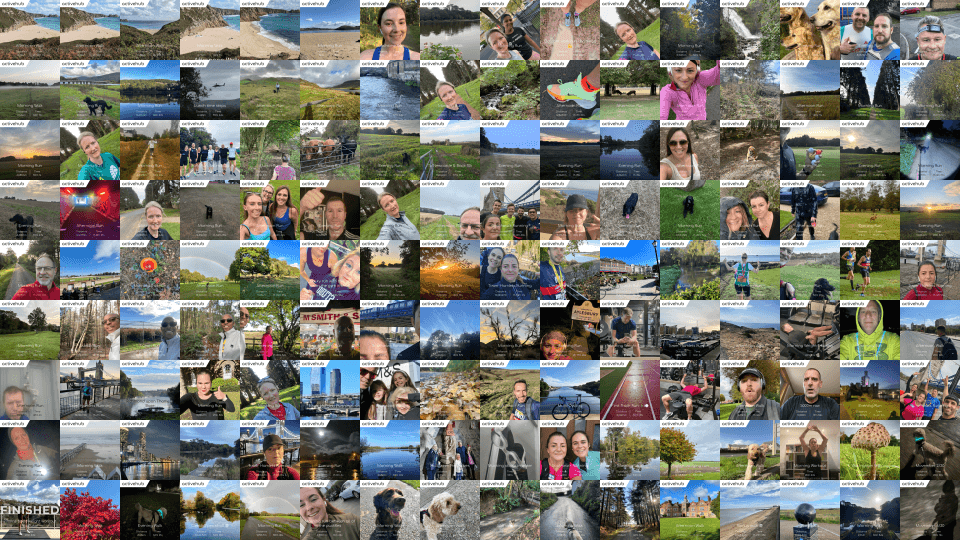
Every day, hundreds of activities are recorded across Total Active Hub, by users wanting to make a real difference to their physical health.
Our users are empowered by their employers to move at least 150 minutes per week whilst being rewarded with numerous incentives such as charity donations, trees and school meals.
Why not take a few moments to read and be inspired by our real-life success stories?
