-
Total Active Hub
Why 20 Minutes a Day Could Be the Healthiest Habit You Ever Build

Ask most people what it takes to get healthier and they picture something large: a gym membership, an early alarm, a plan that swallows an evening.
That picture is part of the reason so many good intentions collapse within a fortnight. The bar is set so high that a busy week knocks it over, and once the streak breaks, the whole thing tends to stop.
The more useful target is far smaller.
Twenty minutes of movement a day, done most days, is enough to meet the national guidelines and, over time, to become the kind of habit you no longer have to think about.
It is not a compromise or a consolation prize. For most people, it is the version of a healthy habit that actually survives contact with real life.
Twenty minutes a day is not a shortcut, it is the target
The UK Chief Medical Officers recommend 150 minutes of moderate activity a week. Spread across the week, that is a little over 20 minutes a day. The maths matters because it reframes the goal: you are not falling short of some heroic ideal, you are meeting the actual recommendation.
And the World Health Organization estimates that around one in four adults worldwide is insufficiently active, so simply reaching the guideline puts you in healthier company than most.
There is nothing magic about the number itself. What matters is that 20 minutes is small enough to fit into a genuinely busy day, yet enough to count. A brisk walk, a short cycle, a bit of gardening or a quick mobility routine all qualify.
The point is not the format; it is that the target is low enough to hit on an ordinary Tuesday.
Small and repeated beats big and occasional
The research on how habits form points in the same direction. The well-known study by Lally and colleagues at University College London, published in 2010, found it took an average of 66 days for a behaviour repeated in a consistent context to become automatic, with a wide range of 18 to 254 days across individuals.
The common thread is repetition, not intensity. Habits are built by doing a manageable thing often, not by doing an exhausting thing once.
This is exactly why 20 minutes tends to outlast the ambitious hour. An hour demands that the rest of your day cooperate; 20 minutes usually does not.
When the daily action is small enough to repeat on a bad day, the streak holds, and it is the unbroken streak, rather than any single session, that eventually rewires the behaviour into something you do without deciding.
The habit that helps your head as well as your body
Twenty minutes a day is one of the lowest-barrier supports we have for mental as well as physical health. A 2023 umbrella review published in the British Journal of Sports Medicine, led by Singh and colleagues, found that physical activity was highly beneficial for reducing symptoms of depression, anxiety and psychological distress across a wide range of populations.
Movement is not a replacement for professional care, therapy or medication, and anyone struggling should speak to their GP or a professional. But as a daily support that complements those things, a short walk is remarkably effective and available to almost everyone.
That accessibility is the point. Lower-barrier formats such as walking suit the days when motivation is thin and a high-intensity session feels out of reach, which are precisely the days movement tends to help most.
A habit you can keep when you feel your worst is worth more than one you can only manage when you already feel good.
How to make the 20 minutes stick
If you want the habit to hold, the design matters more than the willpower. A few principles make the difference:
- Anchor it. Same cue, same time. Attaching the 20 minutes to something you already do — after lunch, before the school run — gives the habit an anchor.
- Keep the barrier low. A walk you can take in ordinary clothes beats a workout that needs kit, a shower and a spare hour.
- Count the streak, not the score. Reward turning up regularly rather than chasing personal bests. Consistency is the thing that compounds.
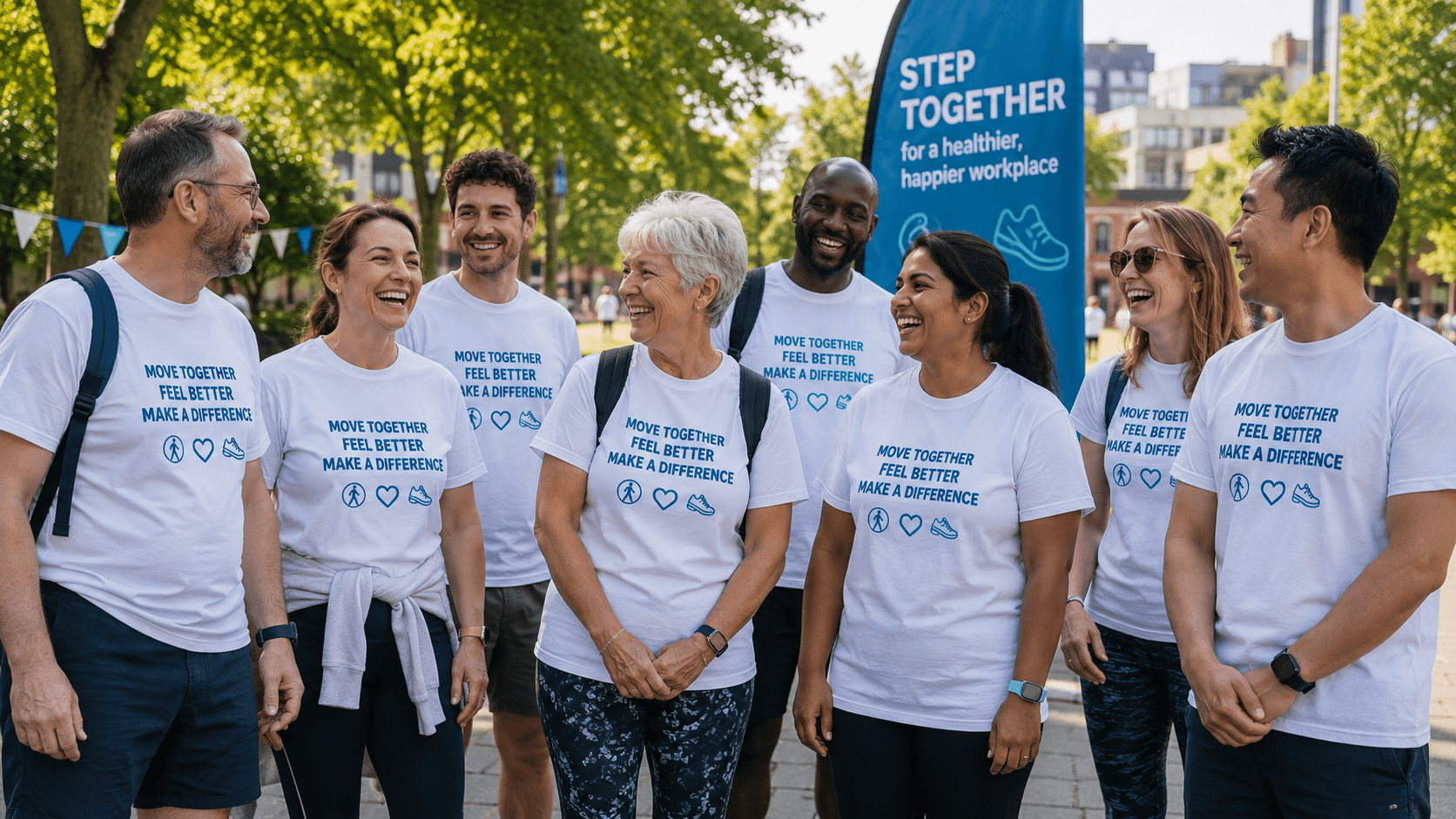
- Make it social or visible. Doing it with someone, or somewhere visible, makes the missed days more obvious and the kept ones more likely.
Set against the national picture, this is where the gains sit. Sport England’s Active Lives Adult Survey for November 2024-25 found 64.6% of adults — around 30.9 million — active at the 150-minute level, the highest on record, yet more than a third of adults still fall below it.
For most of the people in that gap, the missing ingredient is not effort or ambition; it is a target small enough to keep. Twenty minutes a day is that target.
If you would like to talk through how to build daily movement into your organisation in a way that reaches everyone, not just the already-active, we are always happy to share what we have learned at Total Active Hub.
Sources
UK Chief Medical Officers’ Physical Activity Guidelines (2019) — 150 minutes of moderate activity a week, equivalent to a little over 20 minutes a day.
World Health Organization, Global Action Plan on Physical Activity 2018-2030 — around one in four adults insufficiently active.
Lally et al., University College London (2010), European Journal of Social Psychology — average 66 days to form a habit (range 18-254 days).
Singh et al., British Journal of Sports Medicine (2023) — umbrella review finding physical activity beneficial for reducing depression, anxiety and psychological distress.
Sport England, Active Lives Adult Survey November 2024-25 (published April 2026) — 64.6% of adults (around 30.9 million) active at 150+ minutes a week, the highest on record.


-
-
Success Stories
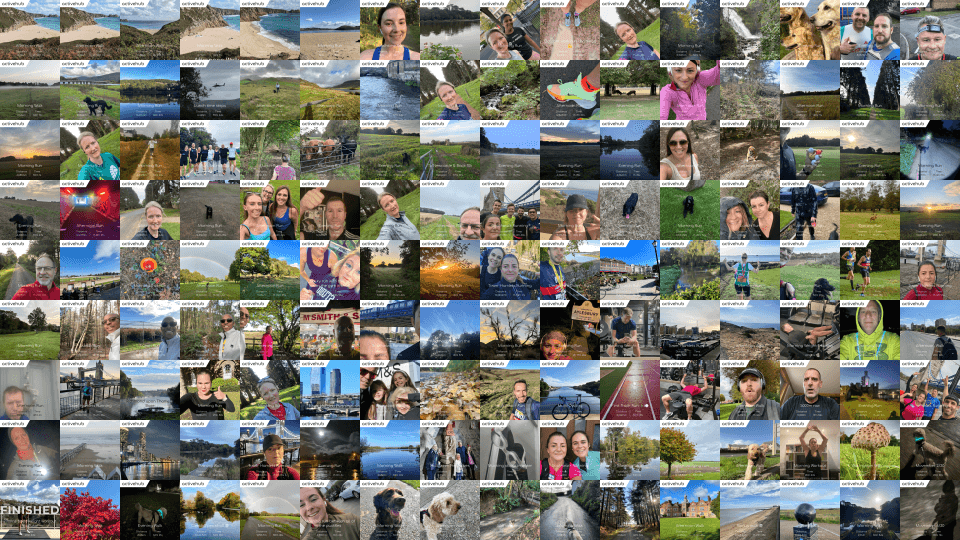
Every day, hundreds of activities are recorded across Total Active Hub, by users wanting to make a real difference to their physical health.
Our users are empowered by their employers to move at least 150 minutes per week whilst being rewarded with numerous incentives such as charity donations, trees and school meals.
Why not take a few moments to read and be inspired by our real-life success stories?
